One Bad Forecast, Seventeen Liquidations: Anatomy of an AI Oracle Gone Wrong
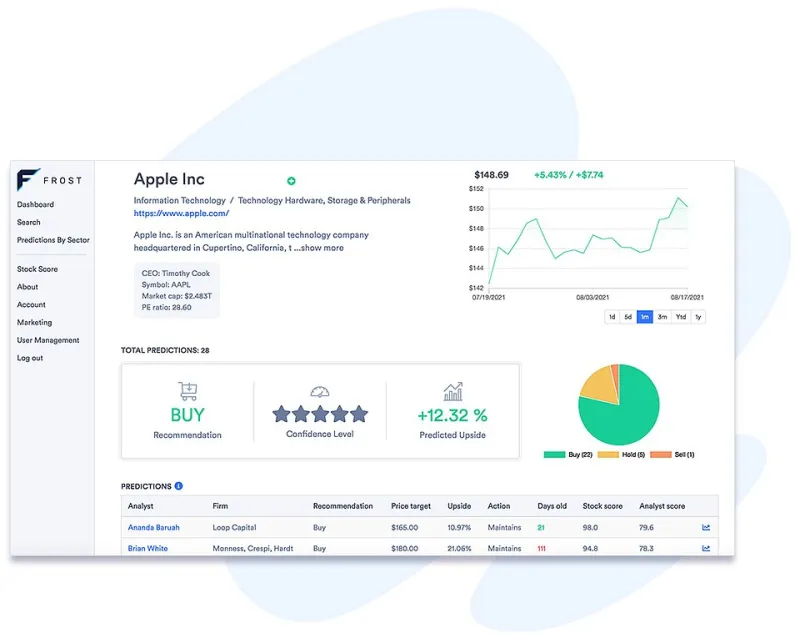
Photo: McEwen Hardy, CC BY-SA 4.0, via Wikimedia Commons
At 2:14 a.m. Eastern on a Tuesday, a machine learning model that most traders had never heard of by name — but nearly all of them were relying on — issued a forecast. A mid-cap token it had tracked for months, one with unusually high historical accuracy, was about to break out. Confidence score: 94%.
By sunrise, roughly $40 million in notional value had been liquidated, three automated liquidity pools had been drained to their floor thresholds, and a Discord server of retail traders was using words like "wiped out" and "lawyer."
Nobody at the model's parent company had touched a trading terminal. They didn't have to. Their prediction was piped, via oracle feed, directly into dozens of trading bots and at least two token launch mechanisms that treat AI forecasts as inputs the way a thermostat treats a thermometer.
This is the oracle problem, and it's no longer theoretical.
The Quiet Plumbing of Prediction
AI price oracles occupy an odd spot in the crypto stack. They're not oracles in the Chainlink sense — they don't fetch facts. They generate opinions. A model ingests order book data, social sentiment, on-chain flows, and historical patterns, then emits a number with a confidence score attached.
The trouble starts with what happens downstream. A quant who builds these systems for a Chicago-based market-making firm, speaking on condition of anonymity, put it plainly: "Our model says 80% probability of upside. A bot reads that as a signal. Another bot reads that bot's behavior as a signal. By the third hop, everyone's trading on a forecast nobody independently verified."
In traditional markets, this kind of herding gets flagged. In crypto, it gets productized. Several recent token launches have baked AI forecasts directly into their mint mechanics — pricing tiers that adjust in real time based on a model's outlook. It sounds clever. It also means the model's errors are no longer contained to one trader's P&L. They're structural.
How a Miss Becomes a Cascade
Here's the anatomy of the Tuesday morning mess, reconstructed from on-chain data and interviews with traders who lived it.
The model predicted a breakout. Bots that subscribed to the feed opened long positions and tightened stop-losses below entry to cap downside. Retail traders — watching what looked like smart-money accumulation — piled in with leverage, because the confidence score was displayed right there on their dashboard like a credit rating.
Then the prediction missed. A large holder moved coins in a way the model's training data hadn't seen. Price ticked down. The bots' stop-losses fired in unison, which is the thing about synchronized automation: it doesn't dampen volatility, it choreographs it. The stops pushed price further down, triggering the next tier of stops, draining liquidity pools that were calibrated to the old price band. Within eleven minutes, the token was down 34%, and the forecast that started it all had been quietly revised — confidence score dropped to 61%, timestamped after the fact.
"Confidence scores aren't guarantees. They're marketing," says one trader who lost roughly the value of a used car in the cascade. "It's like a weather app saying 94% chance of sun. Great. It doesn't mean you cancel your umbrella insurance."
The Quant's Dilemma
The people building these models aren't villains. Most are genuinely trying to solve a hard problem, and several told me the same thing: the model did what it was designed to do. It assigned a probability. The failure was in how that probability got consumed.
A backtester at a New York quant shop described the mismatch: "We publish a distribution. The oracle feed publishes a point estimate. Somewhere in that translation, nuance dies. Ninety-four percent confident becomes certain by the time it reaches someone's trading bot."
There's also an incentive problem. Oracle feeds get paid per subscriber, and subscribers want clean signals, not hedged probabilities with error bars. The market, in other words, is optimizing for legibility, not accuracy.
What Would Responsible Look Like?
A few fixes are floating around the ecosystem, none of them perfect:
- Circuit breakers on forecast-driven liquidity. If a pool's pricing mechanism is tied to an AI feed, a sharp forecast revision should throttle rebalancing rather than trigger it.
- Publishing the revision history. Traders in the Tuesday cascade didn't know the confidence score had already been walked back once that week. Timestamped forecast logs should be as visible as the forecast itself.
- Separating the signal from the leverage. Some launches now cap how much of a pool's float can be repositioned based on a single oracle feed. Crude, but it would have blunted the cascade.
- Disclosing model dependencies. If your token launch prices itself against an AI forecast, say so in the docs — prominently, not in footnote nine.
Trust, But Verify (Then Verify Again)
There's a familiar pattern here. We've watched this movie with credit ratings, with analyst price targets, with every system that turns a probabilistic opinion into an input other machines treat as fact. The difference is speed. A Moody's downgrade takes days to ripple through markets. A bad AI forecast takes minutes.
The quants will tell you their models are getting better, and they're probably right. But better models don't fix a wiring problem. Until the infrastructure treats a prediction as one opinion among many — rather than scripture with a decimal point — every trader downstream is inheriting someone else's blind spot.
The oracle problem isn't that AI is wrong sometimes. It's that the whole apparatus is built to forget that it ever could be.